


New Product Series
Product Classificaiton
Meta Description: Natural leather has inherent color variation between batches. Learn OSAMIC's systematic approach to controlling color differences and reducing complaints.
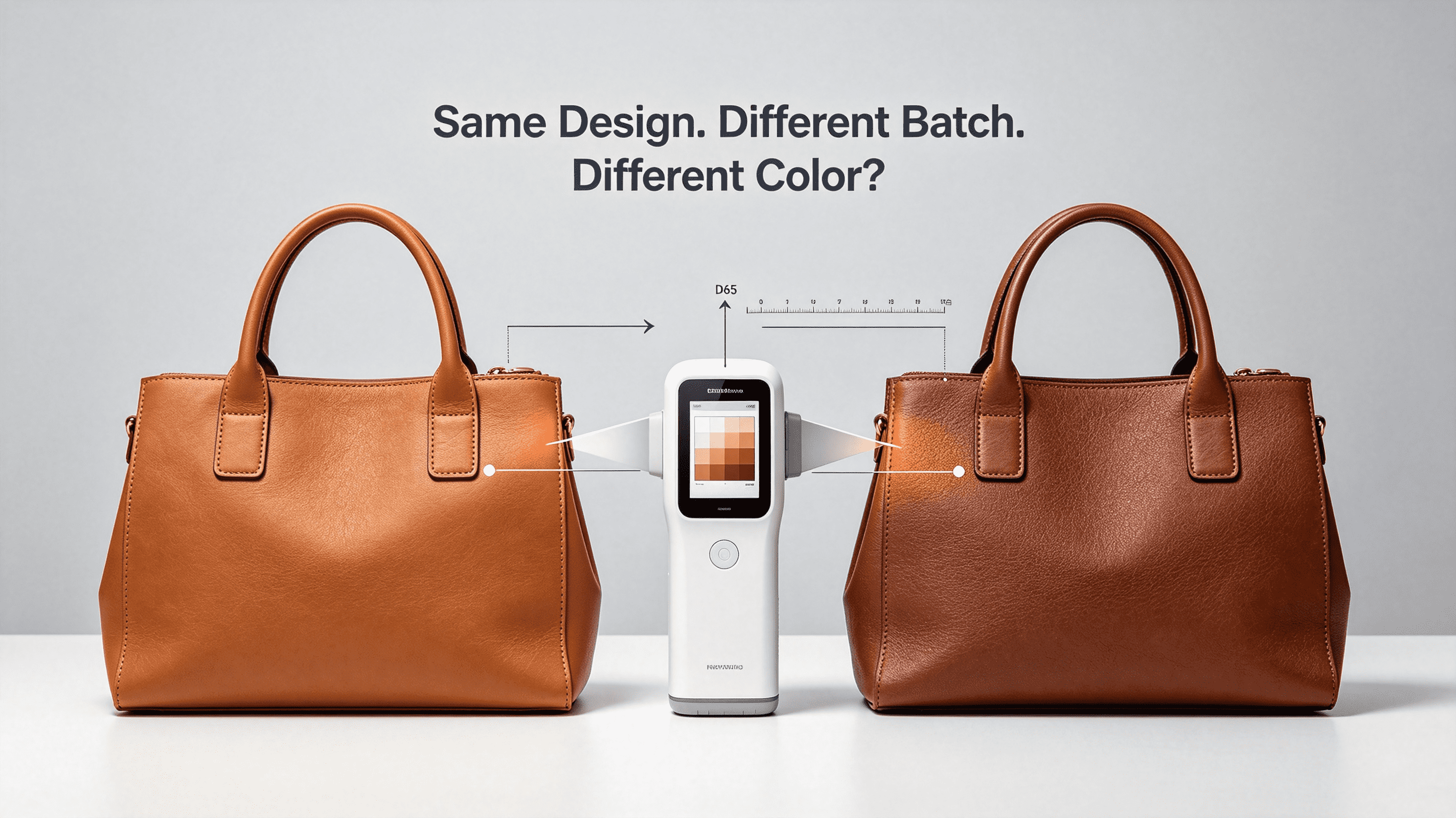
You receive a beautiful batch of leather bags from production. The color looks perfect. You ship them to your customer. Three days later, you get the email:
"We ordered 200 bags in 'Cognac Brown.' The first 50 we received last month were perfect. These 150 look completely different. Some are too red. Others are too dark. Our retail partners are refusing to accept them."
This scenario plays out across the industry every day. Natural leather is not a manufactured material with consistent dye lot numbers like synthetic fabrics. It is an organic product, and every hide is different. The color variation between batches—sometimes even within the same batch—is one of the biggest quality challenges in leather goods manufacturing.The good news? With systematic controls, you can reduce color-related complaints by up to 80%. This guide explains how.
Understanding the root causes is essential to controlling them.
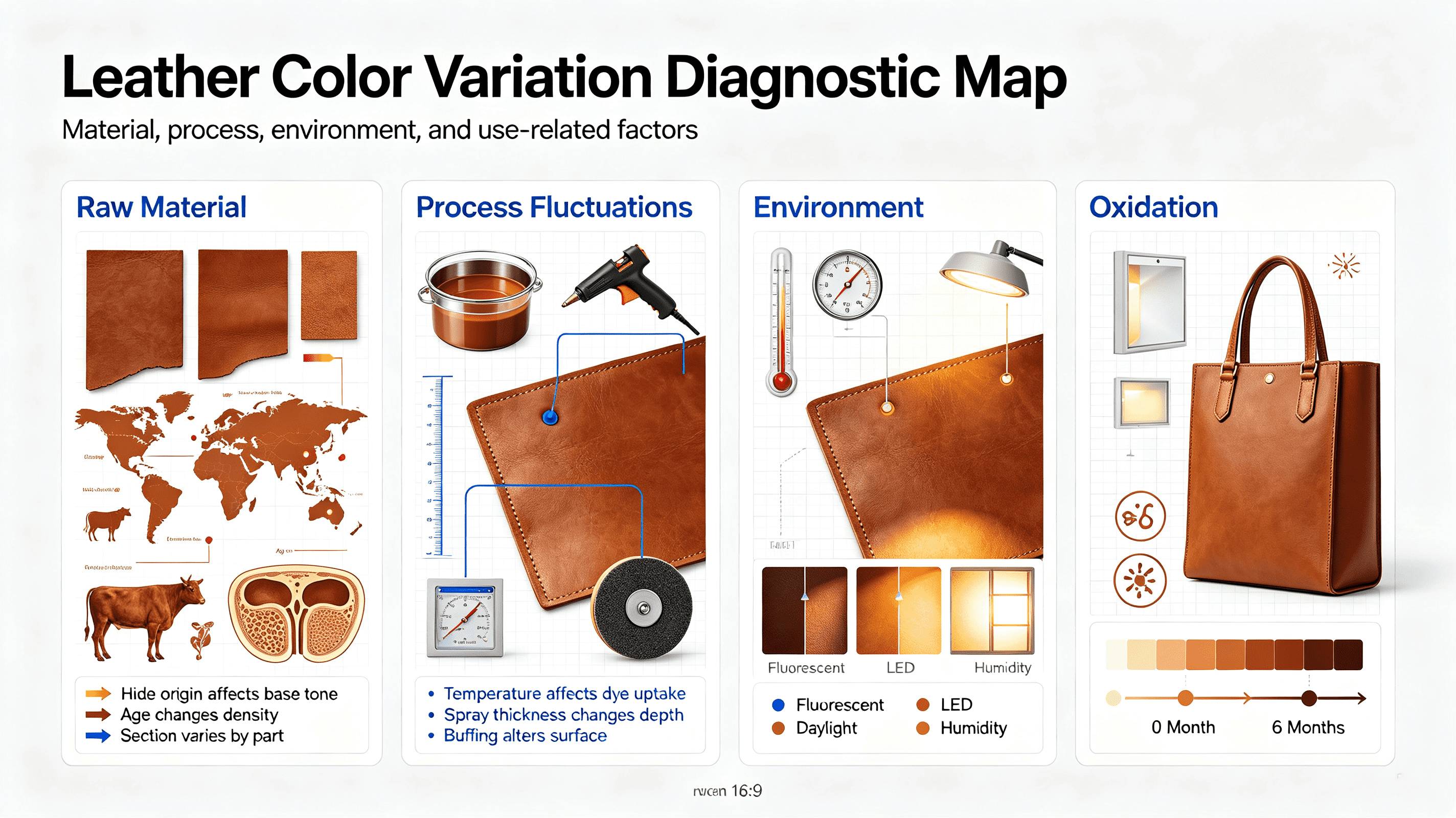
| Factor | Impact on Color |
|---|---|
| Hide Origin | Cattle raised in different regions have different skin structures and baseline pigment levels. |
| Animal Age | Older hides have denser fiber structure, absorbing dye differently than younger hides. |
| Hide Section | Shoulder, belly, and butt sections of the same hide absorb dye at different rates. |
| Seasonal Variation | Hides from winter vs. summer animals have different fat content, affecting dye uptake. |
| Process Step | Variable That Affects Color |
|---|---|
| Dyeing | Dye formula ratio, temperature (±2°C changes color), duration, liquor ratio |
| Finishing | Spray coating thickness, drying temperature and time, pressure from rollers |
| Buffing | Surface abrasion depth affects how much dye penetrates vs. sits on the surface |
| Factor | Effect |
|---|---|
| Workshop Temperature/Humidity | Affects leather moisture content, which changes perceived color |
| Inspection Lighting | Different light sources (fluorescent, LED, daylight) produce different color perception |
| Human Vision Variation | Different inspectors perceive color differently, especially at the edges of acceptable ranges |
Uncoated or lightly finished leathers continue to evolve after leaving the factory. Exposure to sunlight, body oils, and humidity causes gradual color change. Two customers buying the same bag may see different colors after six months of use.
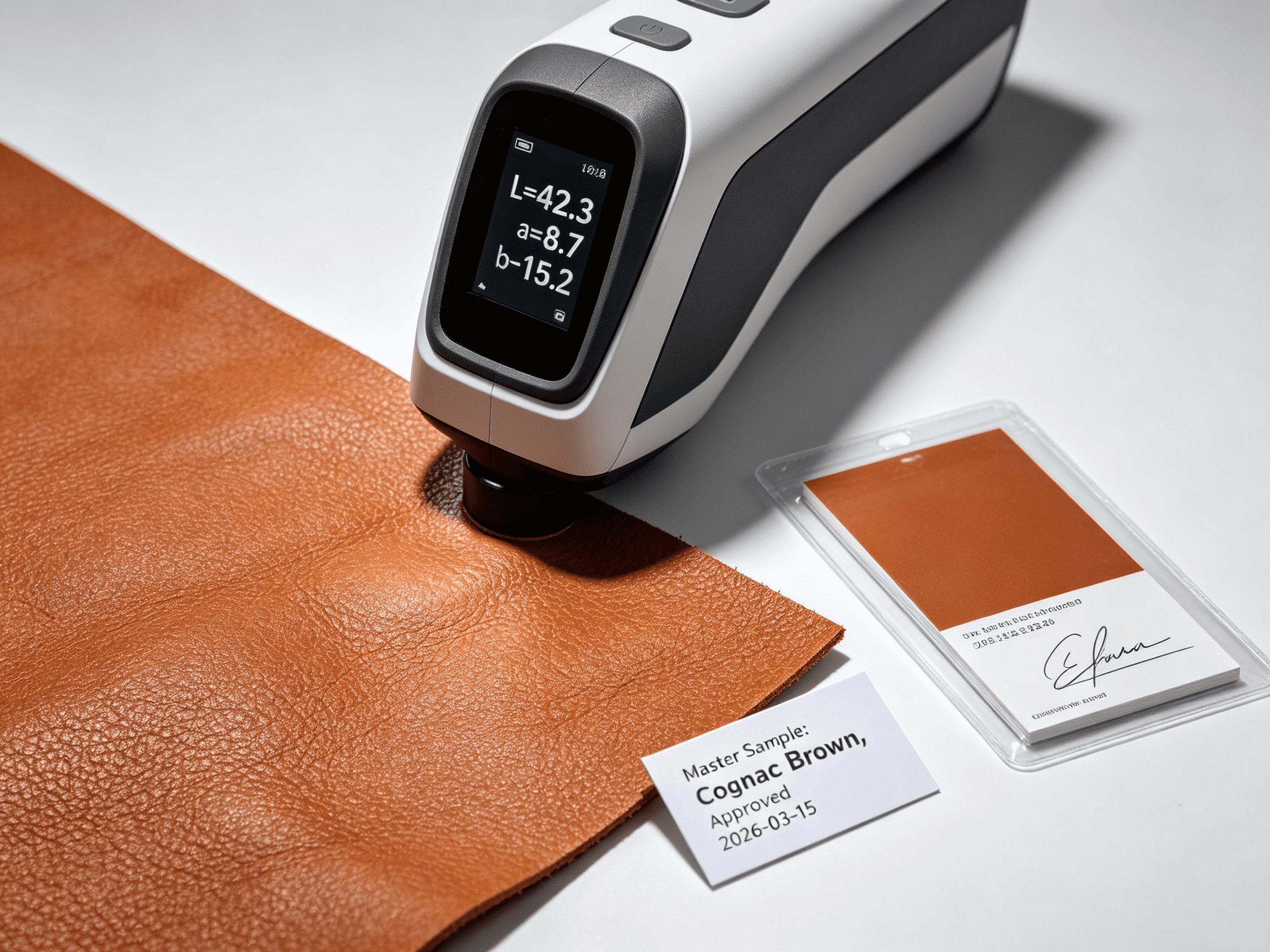
| Tool | Specification | Purpose |
|---|---|---|
| Spectrophotometer (Color Meter) | Measures Lab values (L=lightness, a=red-green, b=yellow-blue) | Removes subjective human judgment |
| Physical Color Standard | A signed, dated master sample stored in light-protected conditions | Provides a visual reference for production and QC |
| Digital Color Archive | Historical Lab values and process parameters stored for each production run | Enables cross-batch color matching |
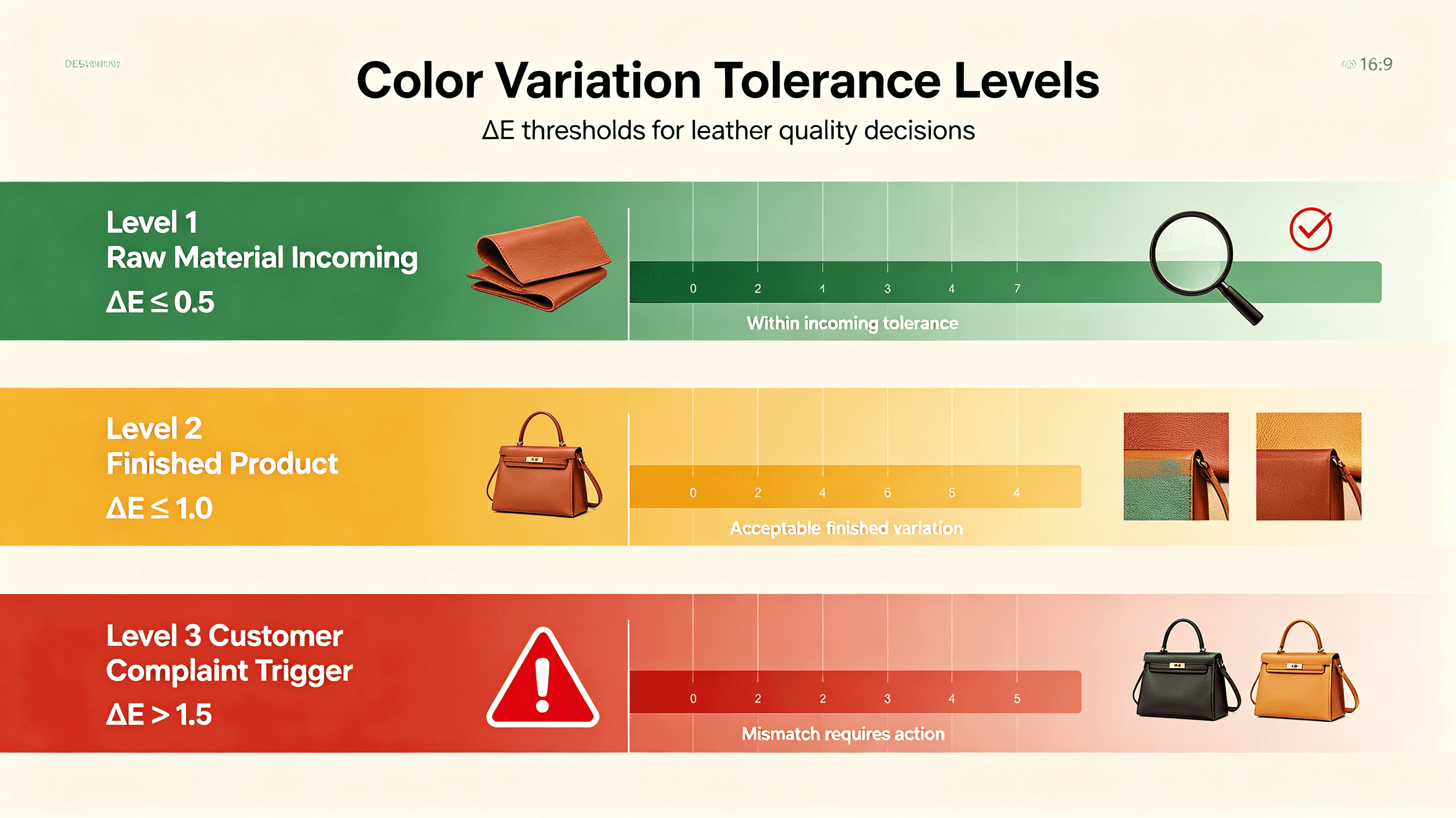
| Stage | ΔE Tolerance | Action |
|---|---|---|
| Raw Material Incoming | ΔE ≤ 0.5 vs. standard | Pass. Sort similar shades together. |
| Finished Product | ΔE ≤ 1.0 vs. standard | Pass. Acceptable for natural leather. |
| Customer Complaint Trigger | ΔE > 1.5 | Investigate root cause. Offer replacement or compensation. |
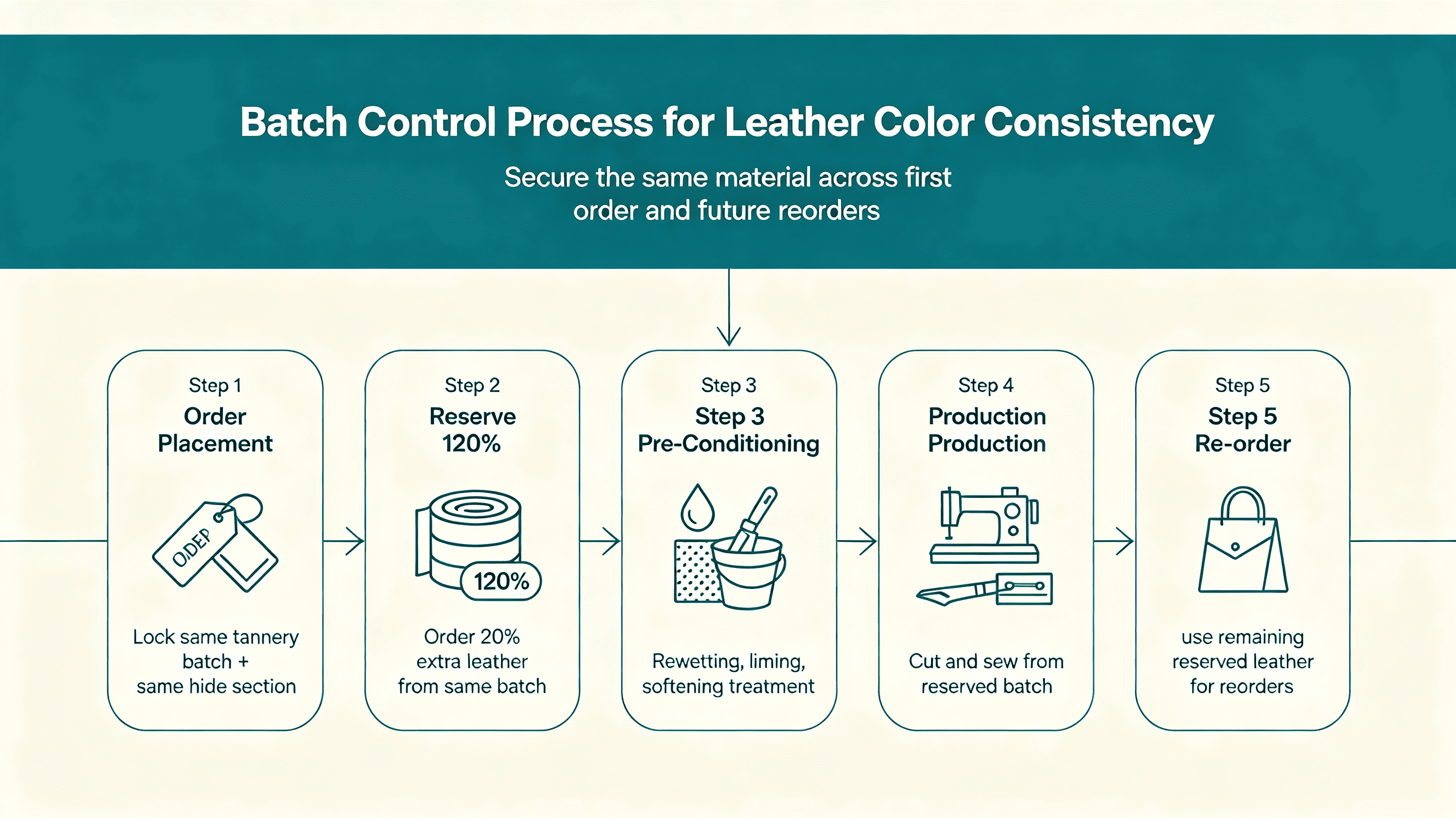
| Practice | How It Works |
|---|---|
| Lock Same Batch | When placing a production order, request leather from the same tannery batch and same hide section. |
| Reserve 120% | Order 20% extra leather from the same batch. Use the reserve for reorders or replacements. |
| Pre-Conditioning | Subject all leather to identical rewetting, liming, and softening treatments before dyeing. This normalizes fiber structure and dye absorption capacity. |
| Document | Content |
|---|---|
| Product Page | Clearly state: "Natural leather may exhibit slight color variation between batches. This is a characteristic of genuine leather, not a defect." |
| Sales Contract | Specify: "Acceptable color deviation: ΔE ≤ 1.0 vs. approved standard sample." |
| Physical Swatch Sign-Off | For premium clients, send a physical color swatch and obtain written approval before production begins. |
| Parameter | Standard | Monitoring Frequency |
|---|---|---|
| Workshop Temperature | 20-25°C (68-77°F) | Daily |
| Relative Humidity | 45-65% | Daily |
| Inspection Lighting | D65 standard daylight (6500K) | Weekly calibration check |
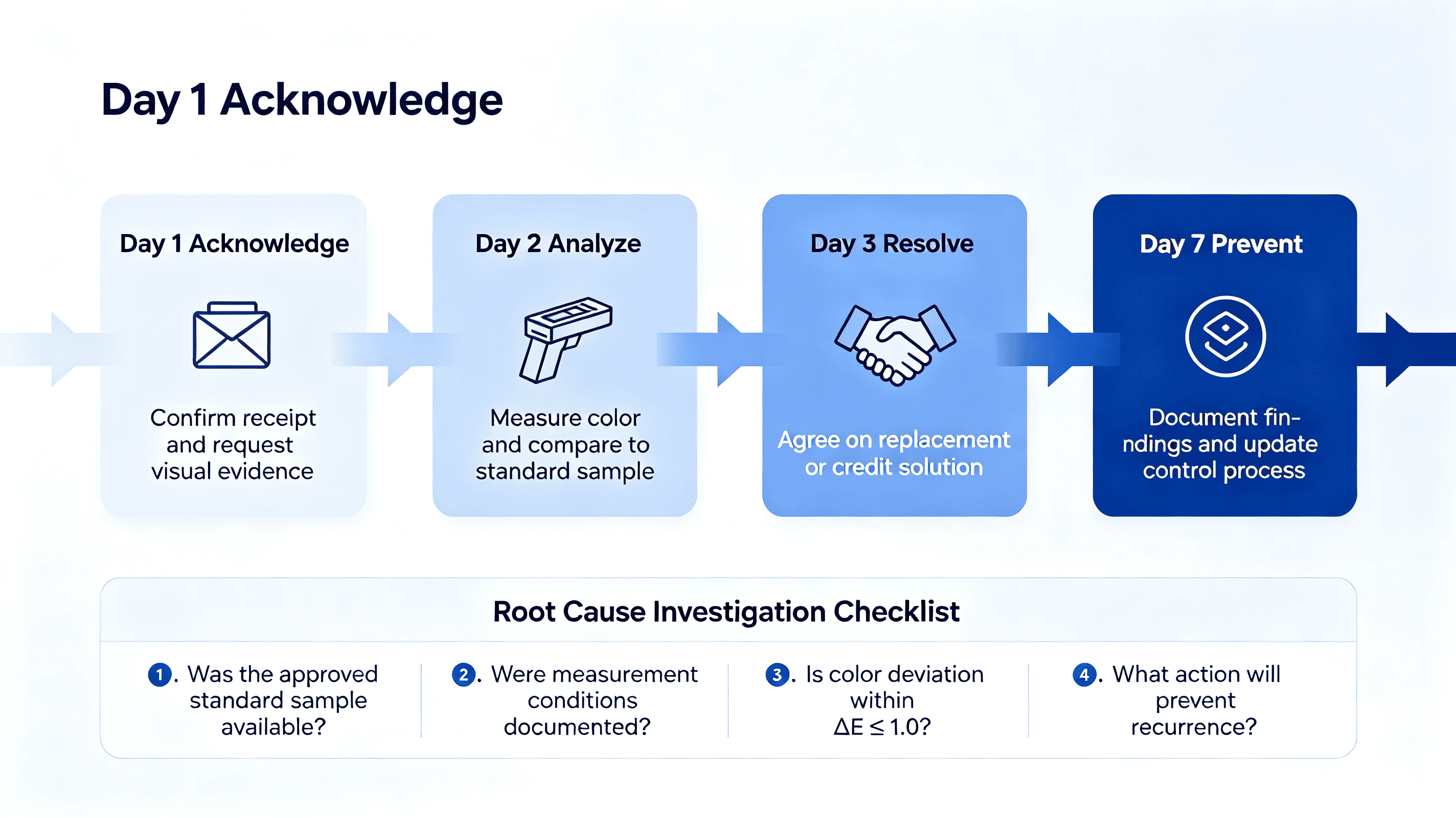
Despite best efforts, color complaints will occasionally arise. Having a structured response minimizes damage.
| Timeframe | Action |
|---|---|
| Within 24 Hours | Acknowledge complaint. Request photos under standardized lighting. |
| Within 48 Hours | Compare photos against archived standard. Measure returned sample with spectrophotometer. |
| Within 72 Hours | Determine if ΔE exceeds 1.0 threshold. Offer resolution: replacement, partial credit, or return. |
| Within 1 Week | Conduct root cause analysis. Update process documentation to prevent recurrence. |
| Question | Possible Finding |
|---|---|
| Was the leather from the same tannery batch? | Cross-batch mixing identified. |
| Were dyeing parameters within spec? | Temperature or duration deviation found. |
| Was the finishing process consistent? | Spray thickness variation detected. |
| Was the inspection lighting standard? | Non-standard lighting led to missed deviation. |
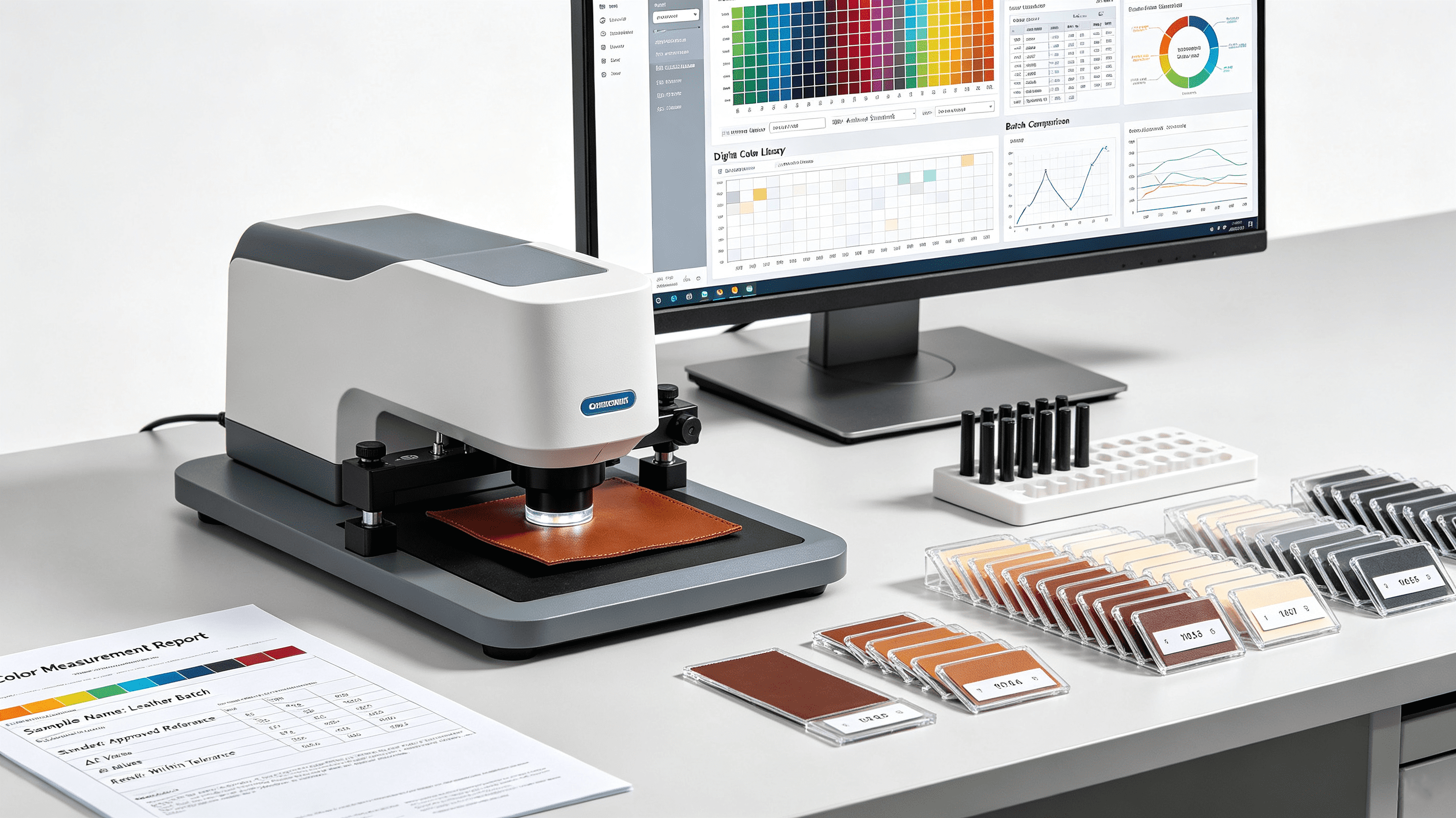
At OSAMIC, color control is embedded in our production DNA.
| Capability | Detail |
|---|---|
| Spectrophotometer at Incoming QC | Every leather shipment is measured before acceptance. |
| Digital Color Library | Over 500 archived color standards with full process parameters. |
| Batch Reservation Service | We hold reserved leather from your original batch for up to 12 months for reorders. |
| Pre-Production Color Swatch | We produce and ship a physical color sample for your approval before bulk cutting. |
| Post-Production Color Report | Every shipment includes a color measurement report showing ΔE values. |
Color variation is not a problem you have to live with. It is a variable you can manage.Quick Self-Assessment:
If you answered "visual inspection" or "no" to any question, you are at risk.Contact OSAMIC for a complimentary Color Control Audit. We'll review your current color management practices and provide recommendations for implementing systematic controls that protect your brand from color-related complaints.